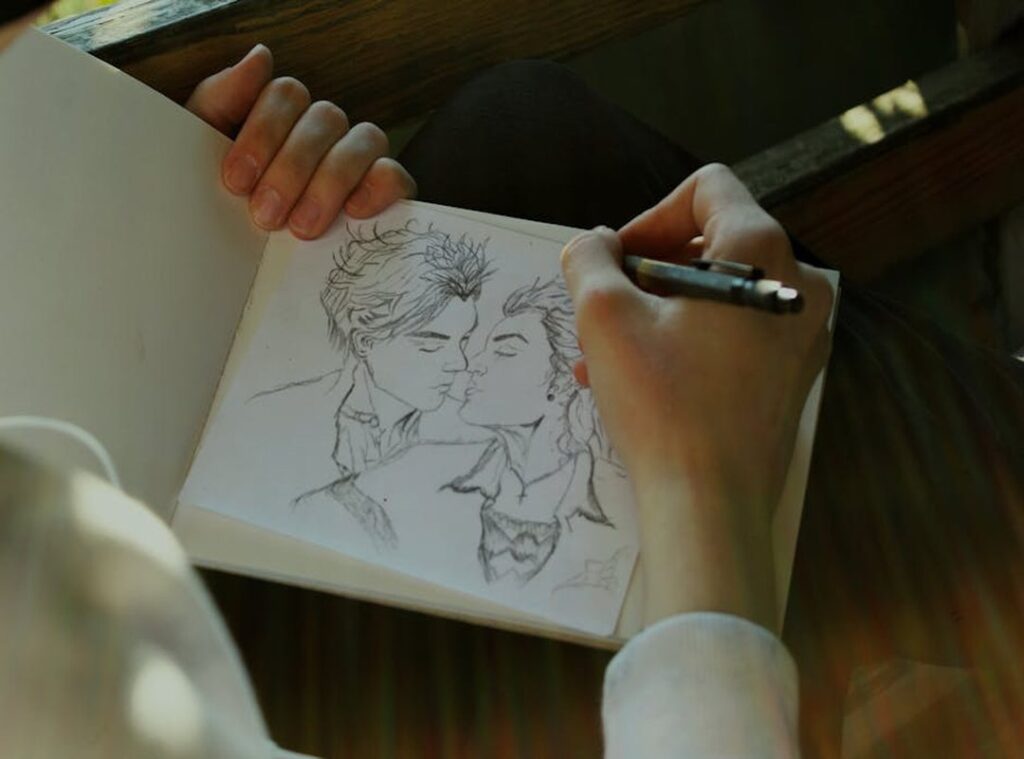
Feeling overwhelmed by emotions that are hard to put into words? Depression can do that, and it’s a common struggle, and it’s tough.
But here’s the thing: drawing lukisan can be a powerful voice for your depression. You don’t need to be an artist. This is about the process, not the final product.
Art can be a therapeutic tool, even if you’ve never picked up a pencil before. I’ll show you how to start with simple exercises.
The science backs this up, and creating art can boost your mental well-being. Trust me, it works.
Why Putting Pen to Paper Actually Helps Your Brain
Ever felt like your thoughts are a jumbled mess? Putting pen to paper can help. It’s all about externalizing emotions—moving a feeling from inside your head onto a physical piece of paper.
This simple act gives you a new perspective, making it easier to understand and manage those feelings.
Drawing, for example, is more than just doodling. The repetitive motion can lower cortisol, the stress hormone, and activate the brain’s reward centers. It’s like giving your brain a little break from the chaos.
| Activity | Benefit |
|---|---|
| Drawing | Lowers cortisol, activates reward centers |
| Journaling | Externalizes emotions, provides clarity |
Getting lost in a creative activity, like drawing, can put you in a state of flow. Flow is that magical moment when you’re so absorbed in what you’re doing that time seems to fly by. It’s a temporary escape from ruminating or negative thought cycles.
Formal art therapy with a licensed professional is one way to go. But using art as a personal coping strategy at home can be just as powerful. Think of it as journaling for your emotions, but with shapes and colors instead of words.
Sometimes, even a simple drawing lukisan depression can be incredibly therapeutic. It’s not about being an artist; it’s about expressing yourself and finding a bit of peace in the process.
Four Simple Drawing Exercises to Start Expressing Yourself Today
The ‘Emotion Scribble’ vs. ‘Color Your Mood’
Sometimes, you just need to let it all out. The ‘Emotion Scribble’ is perfect for that. Close your eyes, focus on a single feeling, and let your hand scribble furiously on the page.
It’s like a release valve for your emotions.
On the other hand, ‘Color Your Mood’ is more about reflection. Assign colors to your current feelings—gray for numbness, dark blue for sadness—and create an abstract color map of your internal state. It’s a visual way to understand what’s going on inside.
‘Draw Your Monster’ vs. ‘Mindful Doodling’
Depression can feel like a monster, so why not draw it? Personify that feeling as a creature, and what shape is it?
What texture, and this helps separate you from the illness. It’s a powerful way to externalize something that feels so internal.
‘Mindful Doodling’ is a different kind of therapy. Create simple, repetitive patterns—lines, circles, swirls—to calm an anxious mind. It’s a no-pressure way to practice mindfulness.
Both exercises are great, but they serve different purposes. ‘Draw Your Monster’ is about facing and understanding, while ‘Mindful Doodling’ is about calming and centering.
No Right or Wrong Way
The key with all these exercises is that there is no right or wrong way to do them. The goal is simply to start. Whether you’re scribbling, coloring, drawing lukisan depression, or doodling, the act of creating can be incredibly therapeutic. drawing lukisan depression
So, which one will you try first?
Understanding the Symbols in Your Depression Art

When you look at your drawings, do you see masks, cages, tangled lines, stormy weather, or small figures in vast, empty spaces? These are common themes in art related to depression.
These symbols are personal, and their meaning is unique to you. This section is for validation, not diagnosis.
Tracking recurring symbols in your drawings over time can reveal patterns in your emotional state. For example, seeing a recurring image of a locked door might represent feeling trapped or unable to access certain emotions.
Understanding these patterns can help you gain insights into your feelings and experiences. It’s like having a visual diary that speaks to you in a language only you understand.
This is a tool for self-exploration, not a replacement for professional diagnosis or therapy. It’s about giving yourself a way to connect with your inner world, to see and feel what might be hard to put into words.
So, next time you pick up a pencil, pay attention to the symbols in your drawing lukisan depression. They might just tell you something important.
What If I’m Not a Good Artist? Overcoming Creative Fear
I get it. The fear of not being a good artist can be paralyzing. But here’s the thing: the benefit comes from the act of creating, not the aesthetic quality of the outcome.
The drawing is for you and no one else. It’s about expressing yourself, not impressing others.
| Material | Why It’s Forgiving |
|---|---|
| Charcoal | Can be easily smudged and changed |
| Crayons | Feel playful and non-intimidating |
Think of it as “making marks” rather than “making art.” This lowers the stakes and makes the process more enjoyable.
Every mark you make is a valid expression of your experience. Whether you’re drawing lukisan depression or just doodling, each line and shape tells a part of your story.
So, go ahead, and pick up that charcoal or crayon. Make some marks.
You might be surprised by what you create.
Your First Mark Is a Step Toward Healing
drawing lukisan depression is an accessible and powerful tool for anyone navigating the complexities of depression. You don’t need to be an artist to benefit; you just need a willingness to express yourself.
Verbalizing feelings can be incredibly difficult. Art provides a vital alternative, allowing emotions to flow freely without the constraints of words.
Grab a piece of paper and a pen. Try just one of the exercises for five minutes. See how it feels.