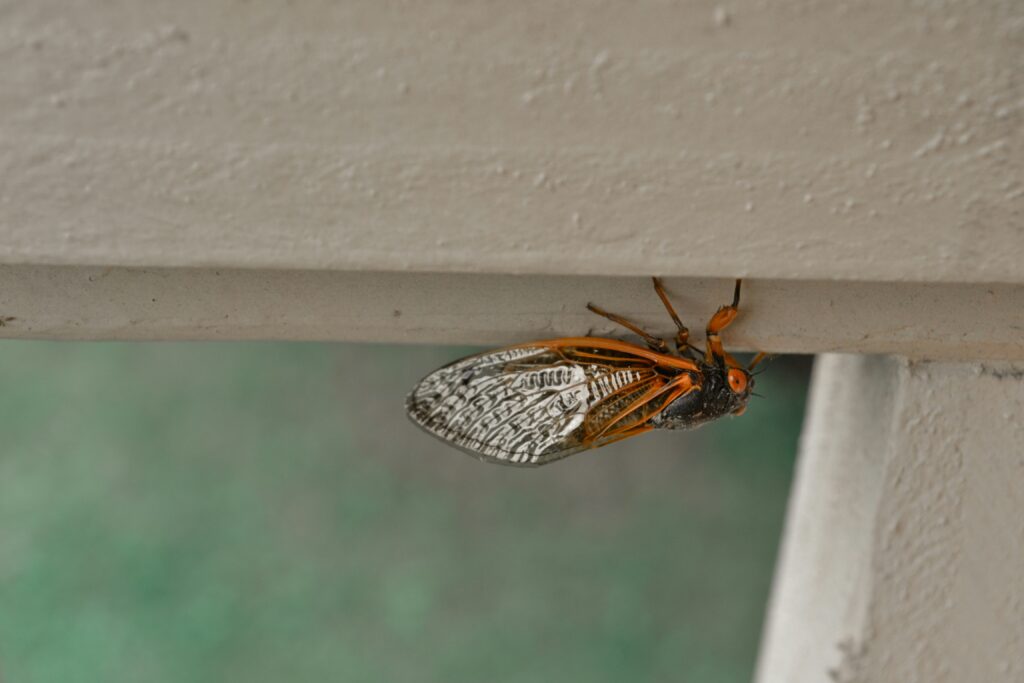
A wasp the length of a thumb hovers over the lawn, swings sharply toward a passing dog walker, and veers away at the last second. Mounds of fresh soil dot a bare strip beside the driveway, each pierced by a hole the width of a finger. Alarm is a natural response, and plenty of homeowners reach for a hose, a shovel, or a can of spray within the hour. That reaction usually causes more trouble than the insects would. Cicada killers look fearsome, yet they are solitary wasps with a narrow job: hunting cicadas to feed their young. Their season is short, their temperament is mild, and their burrows reveal a lot about the soil in a yard. The sections below explain how they live, why they seem menacing, where they dig, and how to watch them safely.
A Short Summer Life Built Around Burrows and Cicadas
Cicada killers are among the largest wasps found around homes, with adults often reaching an inch and a half or more. Rusty-red and black bodies with yellow bands and amber wings give them an intimidating look. Adults emerge in midsummer, about the time cicadas begin to sing, and most are gone by early autumn.
Males appear first and spend their days patrolling nesting areas in search of females. Females do the digging. Each burrow runs down several inches into sunny, well-drained soil and branches into small side chambers. After paralyzing a cicada with a sting, a female drags it to the burrow, places it in a chamber, and lays a single egg on it. The larva feeds on the cicada, spends the winter underground, and emerges as an adult the following summer. One female may stock several chambers over a few weeks.
The soil heaped at each entrance resembles a tiny volcano, with one larger hole near the center. Because many females favor the same warm patch, a yard can hold dozens of burrows in a small area. Nothing about this behavior involves the house, the garden plants, or the picnic table. Adults feed on nectar and have no interest in human food.
Why Their Size Makes Them Seem More Aggressive Than They Are
Size explains most of the fear. A wasp that big, flying fast and low, reads as a threat even when it is doing nothing of the kind. Males add to the impression. They are territorial, and they zoom at anything that enters their patch, including people, pets, bees, and rival males, sometimes hovering inches from a face before veering off. Males have no stinger at all, so the display is bluff.
Females carry a stinger, but they use it mainly on cicadas. They are reluctant to sting people, and stings generally happen only when one is grabbed, stepped on barefoot, or pinned against skin. Homeowners who wonder “can cicada killers hurt you” will find that the honest answer is yes in a narrow sense. A female can sting, and the sting can hurt, but it is rare and the wasps have no reason to pick a fight. Their venom is built to paralyze prey, not to defend a hive, and there is no colony to guard because each female works alone.
Anyone with a known allergy to wasp or bee stings should treat every stinging insect with respect and discuss an action plan with a doctor. For everyone else, ordinary lawn activity carries little risk. Shoes on, no swatting, and a calm pace let the wasps carry on without conflict.
Where Cicada Killers Dig and Why Numbers Change From Year to Year
Cicada killers choose soil, not houses. They prefer bare or thinly grassed ground in full sun, with sandy or loamy texture that drains quickly and is easy to dig. Typical sites include the edges of driveways, the borders of patios, raised beds with loose soil, thin lawn patches beneath sparse trees, and the base of retaining walls. A sandbox or a dry slope can serve just as well.
Turf density matters. Thick, healthy grass blocks easy digging and shades the ground, so wasps usually pass over a well-kept lawn in favor of a struggling corner. Drought, compacted soil, and heavy foot traffic all create the bare spots they like. Deep mulch also discourages them, because the layer is hard to tunnel through and keeps the soil cooler.
Population swings are common. Females often nest close to where they emerged, so a site that hosted a few burrows one summer can host many the next. Abundant cicadas in nearby trees support larger numbers. Because the larvae develop underground over the winter, activity in a given spot usually tracks the previous year’s nesting. Mapping where burrows appeared gives a homeowner a clear picture of where to adjust the yard before the next season starts.
Watching From a Safe Distance and Avoiding Unnecessary Disturbance
Observation is the best response for most yards. These wasps ignore people who ignore them, and a few minutes of watching shows how harmless the daily routine really is. A handful of habits keeps everyone safe:
- Stay several feet from active burrows and keep children and pets back.
- Avoid swatting at males, since flinching invites contact and teaches nothing.
- Do not stomp, dig, or flood burrows, which can provoke females and does little to the larvae below.
- Wear closed shoes when walking across sunny, bare ground.
- Mow carefully around mounds, and note where they are before running machinery.
Calm behavior matters because the practical answer to whether these solitary wasps can sting depends almost entirely on how people act around them. A female pressed against bare skin may sting. A female left alone will haul prey and ignore the crowd.
Identification helps too. Ground-nesting yellowjackets and European hornets look similar at a glance, yet they live in colonies and defend them aggressively. A close photo or a few minutes of watching, noting whether one wasp or many use a single hole, separates the species before anyone decides how to respond.
Managing Burrows That Appear in the Wrong Place
Some locations are simply inconvenient. A cluster beside a front walk or under a play structure justifies a plan, and the best plans work with the soil instead of against the wasps. Thickening the turf is the longest-lasting fix. Overseeding bare patches in autumn, watering them regularly, and correcting compaction reduce the open, sunny soil that attracts females. Beds can be covered with two or three inches of mulch before emergence in early summer. Landscape fabric or sod over a persistent bare strip works as well.
Avoid pouring gasoline, bleach, or other liquids into burrows. These contaminate soil and groundwater, create fire hazards, and often fail anyway. Insecticide dusts applied to individual entrances can reduce activity in a small area, though they should be used according to the label and only where nothing else will work.
Time is on the owner’s side. Adults live only a few weeks, and activity drops quickly by early autumn. Large aggregations near entryways, schools, or households with allergic members are reasons to ask a pest professional to assess the site and recommend a measured approach. Otherwise, marking burrows with small flags and waiting for the season to end costs nothing.
Key Takeaways
Cicada killers look alarming and behave calmly. Males bluff without a stinger, females sting rarely, and the burrows reflect sunny, thinly covered soil. Watching from a distance, wearing shoes, and leaving burrows undisturbed prevents nearly every sting. Thick turf, mulched beds, and careful identification reduce next year’s activity without harming the soil. When a large colony forms near a place families use daily, an expert assessment adds safety and saves effort. Patience handles the rest, since the wasps vanish as autumn arrives.